
I’ve rushed B site thousands of times. I know the angles, the prefire spots, the exact half-second window before the enemy AWPer rotates from mid. But I have never rushed B while a dense fog cloaks the corridor, while my enemies waddle forward with giant turtle shells strapped to their backs, and while my teammate – who just laid a glowing healing mushroom in my path – is screaming because a stray Shard Card turned his pistol into a confetti cannon. That was my Tuesday night in Fragpunk, the competitive 5v5 shooter that treats Counter-Strike’s sacred template like a jazz pianist given permission to break every key in search of a new chord.
Fragpunk’s soul lives in its Shard Card system, a deck of 169 single-round mutators that teams purchase with pooled resources. In this upside-down economy, guns are free – the real currency is chaos. I’ve drawn cards that made limbs invulnerable to damage, that transformed my entire squad into melee zombies after death, and that granted everyone a sword with the bullet-deflecting grace of a retro Jedi knight. It’s the FPS equivalent of a mad scientist’s kitchen, where every round is a new recipe and the main ingredient might be a gravity flip or a sudden third bombsite.
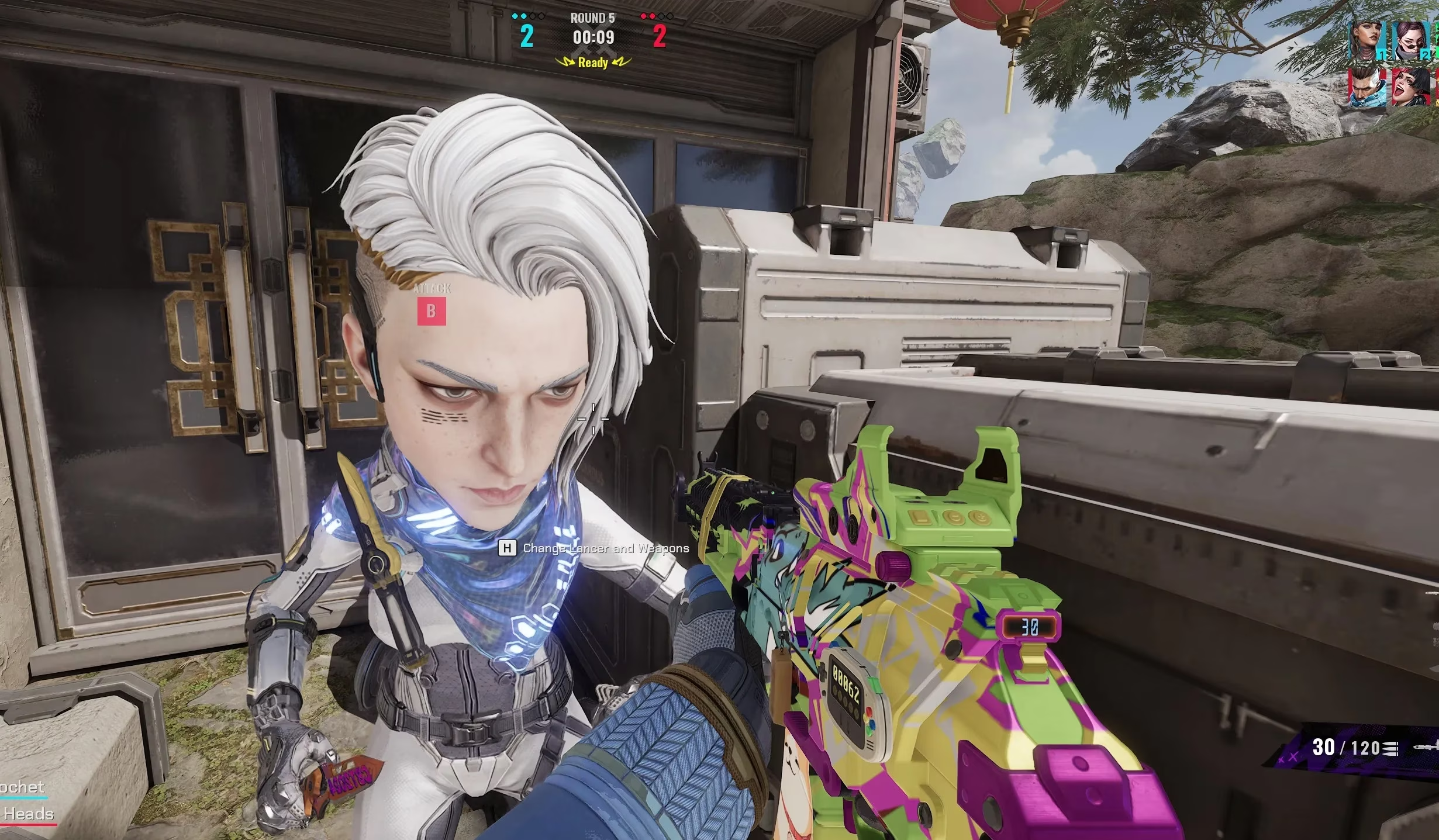
The game wears its Counter-Strike skeleton proudly. Recoil patterns are burned into muscle memory, map awareness still dictates who wins the mid peek, and the eternal AWP-versus-rifle tension hums underneath every duel. But unlike the surgical purity of CS, this is a world where one card can erase an entire bombsite and another can detonate a giggle-inducing big-head mode on the enemy team. It feels like playing chess while someone tosses a handful of dice onto the board – and somehow, the match becomes more thrilling, not less.
What holds this carnival together is how faithfully Fragpunk preserves the gunplay foundation. I found my years of CS positioning and spray control translating seamlessly. The grenade play has mutated into a grenade-launching pistol, but the arc of a flashbang’s parabola and the geometry of a smoke wall still sing the same song. It’s a comforting anchor in a sea of weird, like finding a solid handhold on a rapidly shifting puzzle cube.
The hero abilities add a second layer of unpredictability. Characters can teleport, throw tornadoes, erect defensive walls, or send a miniature fire-breathing critter that reminds me of a chibi Growlithe yapping at ankles. Some signature powers flirt with Valorant’s ultimate territory: Broker carries a rocket launcher that one-shots enemies near their feet – two shots, no ultimate orb required. It took me a few rounds to decode the particle effects and realize that the crackling electric trap on the ground wasn’t about to murder me, but the frustration melted quickly. Normal onboarding friction. The real adjustment for a CS purist is the sheer volume of location-changing tricks: Serket can blur into invisibility and teleport across the map, Zephyr goes fully invisible for a one-hit-kill backstab that’s only betrayed by the game’s inconsistent footstep audio. That audio, I’ll grumble, is about as reliable as a paper umbrella in a hurricane – invisible assassins waltz up to me with footsteps that sound like distant whispers.
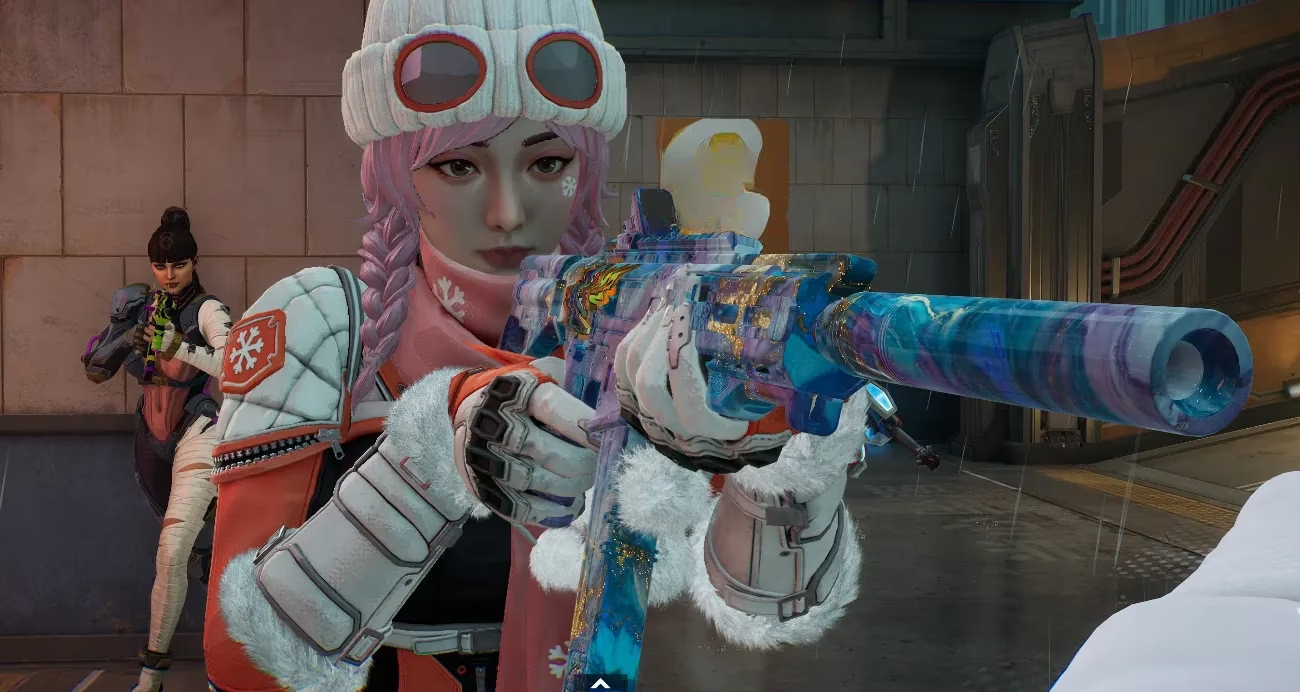
Then there’s the Duel finale, which settles 3-3 ties in casual mode with a Warzone Gulag-style series of 1v1s. I love – and dread – the pressure of being the next champion chosen, stepping into that glass cage while the entire server spectates in a peanut gallery. I’ve blown a key duel by whiffing my rifle spray in front of eleven silent judges, and I’ve walked away a hero after a last-second headshot. That social crucible feels like a gladiator’s moment, a perfect punctuation for a match that already zigs and zags like a hyperactive lightning bolt.
One of the most disorienting parts of Fragpunk, however, isn’t the gameplay – it’s the home screen. The monetization hits you like a confetti bomb of achievements, events, currencies, tiered loot boxes, stickers, and a Tamagotchi-like imp that demands a daily check-in. Most of the hero roster is locked at the start, which surprised me. But that onboarding clutter fades once you’re inside a match, where the raw loop of shoot-die-shuffle-cards overtakes everything.
What fascinates me most, even a year since launch, is how durable Counter-Strike’s DNA proves under this pressure. Fragpunk isn’t a mockery of the formula; it’s a stress test that reveals just how flexible those core mechanics are. The game absorbs Valorant-style abilities, multiplies them with Shard Card tomfoolery, and still delivers moments of genuine competitive clarity. It’s like a glass of water that turns into wine, then soda, then back to water – the vessel never breaks.
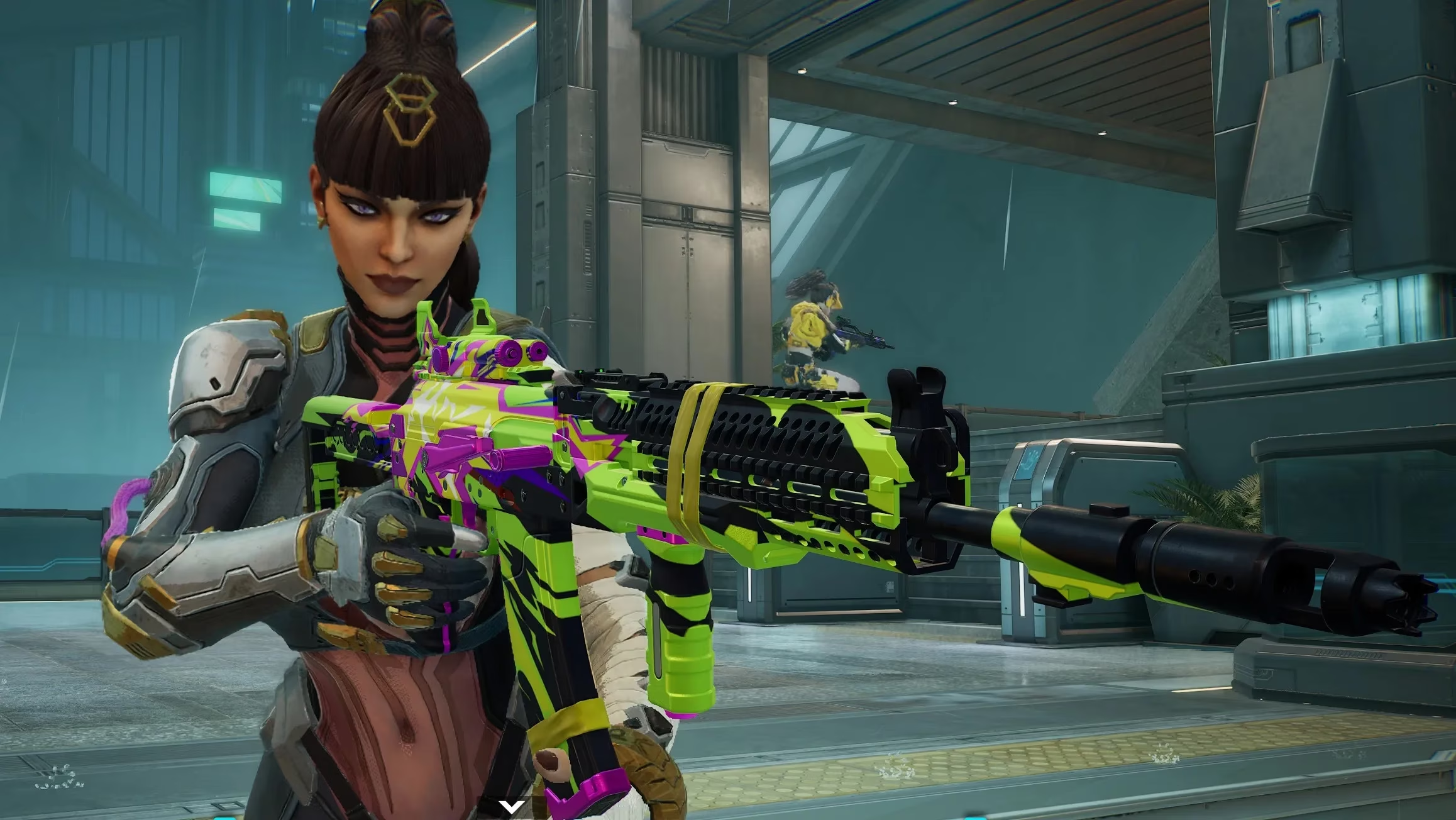
As of 2026, Fragpunk has carved out a comfortable niche alongside the titans. It climbed past 113,000 concurrent players on Steam during its launch window, and while the numbers have ebbed, the community that remains is loud, creative, and deeply invested in the card-driven madness. NetEase’s other hit, Marvel Rivals, might grab the headlines, but Fragpunk is the one I boot up when I want to turn my shooter brain sideways and see what falls out. Balance purists will shudder; I just smile every time I crouch to lay an egg, eat it for health, and then die to a zombie melee rush. It’s not chess anymore. It’s something better: a jam session where every riff is a new rule.