
Bro, I can't even—Valve just dropped the mother of all rule updates, and the CS2 esports scene is never going back to the wild west of skin gambling sponsors. We've been living in a world where top-tier teams are plastered with logos from case-opening and skin trading sites like they're going out of style, but as of December 2025, Papa Gaben officially pulled the plug. Yeah, you read that right. No more Skin.Club, no more G4Skins, no more CSGOSKINS on jerseys or anywhere during broadcasts. It's all over. 🎬
I still remember opening my first case back in the day, praying for a knife, only to get a battle-scarred P250 Sand Dune and a life lesson in statistics. The skin economy has always been this beautiful, chaotic monster—some items worth more than a house, like that StatTrak Karambit | Case Hardened that sold for over a million. It's insane. But alongside that, a whole parallel industry of gambling platforms sprouted up, sucking in players young and old, and Valve has been side-eyeing this for years. They finally did something about it, and honestly? It's about time.
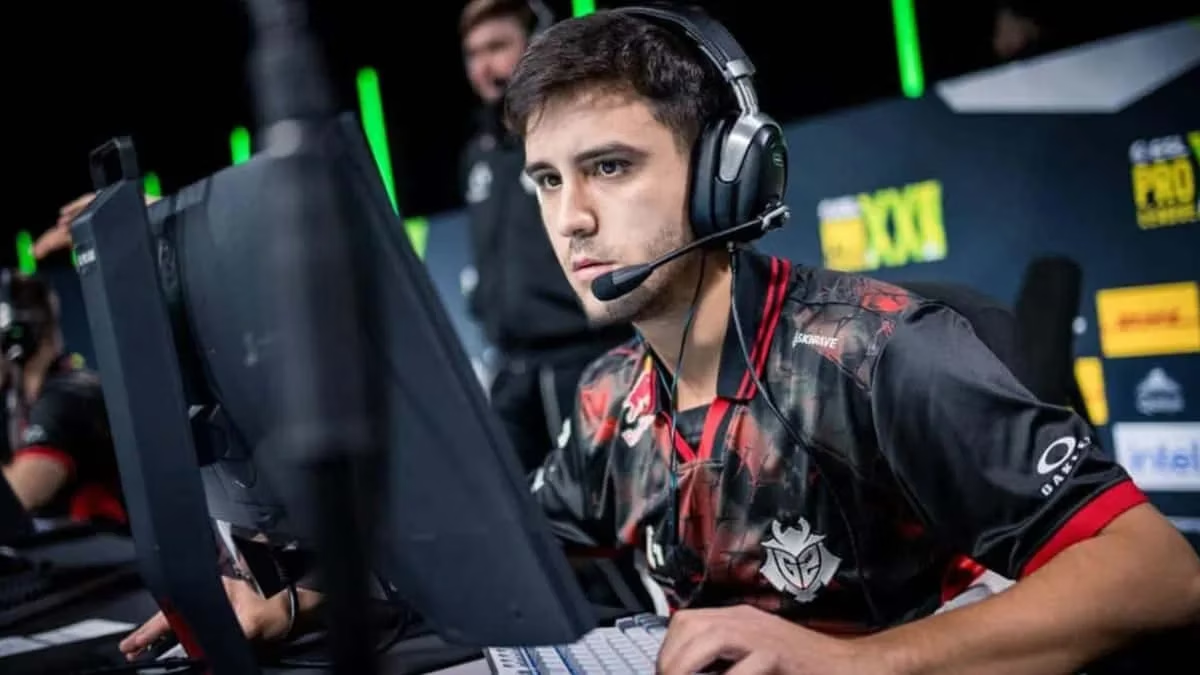
Let me break it down for you. On December 9, 2025, Valve updated their Tournament Operation Requirements and Limited Game Tournament License. The new language is crystal clear: tournament organizers cannot distribute or display any content that violates Valve's IP or the Steam Subscriber Agreement. This includes team jerseys, overlays, in-game ads, you name it. And guess what falls squarely under that umbrella? Yep—case opening sites, skin trading platforms, and especially skin gambling services. They're all banned from professional CS2 broadcasts. No loopholes, no sneaky bits, just a big, fat "nope."
Now, if you're like me, you probably stared at your screen for a second and thought, "Wait, how many teams actually have these sponsors?" The answer: a lot. But the real kicker is that three out of the top five ranked teams in the world right now were directly affected. Let's take a look at that uncomfortable triangle:
| Team | Current Sponsor on Jersey | Type of Service |
|---|---|---|
| Vitality | Skin.Club | Case opening |
| MOUZ | G4Skins | Skin trading |
| The MongolZ | CSGOSKINS | Skin gambling |
These aren't no-name squads—these are giants. Vitality, the French powerhouse, rocked the Skin.Club logo right on their chest. MOUZ had G4Skins emblazoned front and center. And The MongolZ, the pride of Asian CS, carried CSGOSKINS. All of them had to scramble. According to reports from HLTV, some teams got a quiet heads-up before the Starladder Budapest Major 2025 and showed up with plain jerseys, no gambling ads in sight. Imagine the background chaos: managers calling sponsors, designs getting scrapped, and players suddenly feeling... a little less lucrative. 😅
But here's the thing—Valve didn't do this alone. YouTube already cracked down on promoting CS2 skin gambling content back in the day, and the platform's bots have been flagging anything that even smells like a referral code. So it's a pincer movement: the biggest video hub and the game's creator both saying, "We're done with this." And in 2026, it's hitting harder than ever. The days of young fans seeing a pro player's jersey and rushing to gamble their pocket money on a third-party site? Over. Finished. GabeN has spoken.
From a fan perspective, this feels... weirdly cleansing. Watching a major used to mean your eyes were constantly bombarded with shady URLS. Now, the broadcast is all about the game, the team logos, the clean in-game UI. No more "USE CODE ZYWOO FOR FREE COINS" plastered on the side. It's just pure Counter-Strike again. For the teams, though, it's a financial earthquake. These sponsors were paying serious cash. Skin gambling sites poured millions into the scene—keeping orgs afloat, funding bootcamps, and subsidizing salaries. Without that money, the lower tiers of pro CS might struggle. We might see fewer tournaments, weaker tier-2 support, or a shift back to endemic sponsors like Razer and HyperX. It's a double-edged sword, and I'm not sure how it'll shake out long-term.
The community reaction has been... split, but honestly, mostly positive. Old-school players who remember the CS:GO match-fixing scandals tied to skin betting are breathing a sigh of relief. Newer fans might mourn the loss of those flashy promo codes. Then there are the pragmatists who just want to see how orgs adapt. My Twitter feed is a mess of hot takes and meme edits of GabeN as Thanos snapping his fingers—except instead of dust, it's a pile of expired sponsorship contracts.
Looking back at 2025, that Starladder Budapest Major was probably the last rodeo for some of these gambling-branded jerseys. I remember tuning in, and halfway through the stream, noticing something was off. MOUZ looked... naked? Then it clicked. No G4Skins logo. It gave me this weird nostalgic vibe, like when your favorite bar removes the neon sign out front—still the same place, but something’s missing. But also, a lot less sketchy.
Casting my mind even further back, the skin-gambling ecosystem has been a thorn in Valve’s side since the early CS:GO days. Remember PhantomL0rd? The CSGO Lotto controversy? Valve’s slow, grinding legal and policy machinery has been chipping away at the connection between their game and underage gambling. This recent rule feels like the final stake through the heart. In 2026, the competitive CS2 landscape will probably look very different. Teams will have to find new, legitimate revenue streams. Maybe we'll see a renaissance of merchandise sales, digital collectibles that don't involve gambling, or even a closer partnership with Steam's own marketplace in a more official capacity.
Speaking of the future, I have a sneaking suspicion this will push esports orgs toward more sustainable models. Think crypto-adjacent but not gambling—like fan tokens that offer voting rights or exclusive content. Or maybe a return to good old hardware companies. My desk is already littered with Logitech and Zowie gear; seeing those logos back on the big stage would be a warm hug from 2015.
But let’s not kid ourselves—the skin gambling genie isn’t going back in the bottle completely. The sites will still exist, just without the glossy esports seal of approval. They'll pivot to more aggressive social media ads, influencer tie-ins (until those platforms swing the ban hammer too), or maybe they'll try to launder themselves as "case battle" communities. Valve knows this, and I expect further tightening. Perhaps in 2026 we'll see automatic game bans for linking gambling sites in your profile, or restrictions on Steam API usage that choke off site inventories. The cat-and-mouse game continues.
For now, as a spectator, I’m just enjoying the cleaner streams. The next major, whatever it will be called, will have a purity that we haven’t seen in years. No more awkward moments where the casters accidentally read out a gambling URL while describing a clutch. No more orgs caught between financial necessity and community backlash. Just good old Counter-Strike, raw and unfiltered—well, except for the inevitable Energy Drink and PC part sponsors, but those are blessedly tame by comparison.
At the end of the day, Valve’s crackdown on CS2 skin gambling sponsors is a defining moment for the esport. It’s a statement that the long-term health of the game—and its playerbase—matters more than a quick buck. And as someone who’s been frag-hunting since 1.6, I can only nod and whisper, "Took you long enough, Gabe." Now let’s see what the pro scene builds from the ashes.