
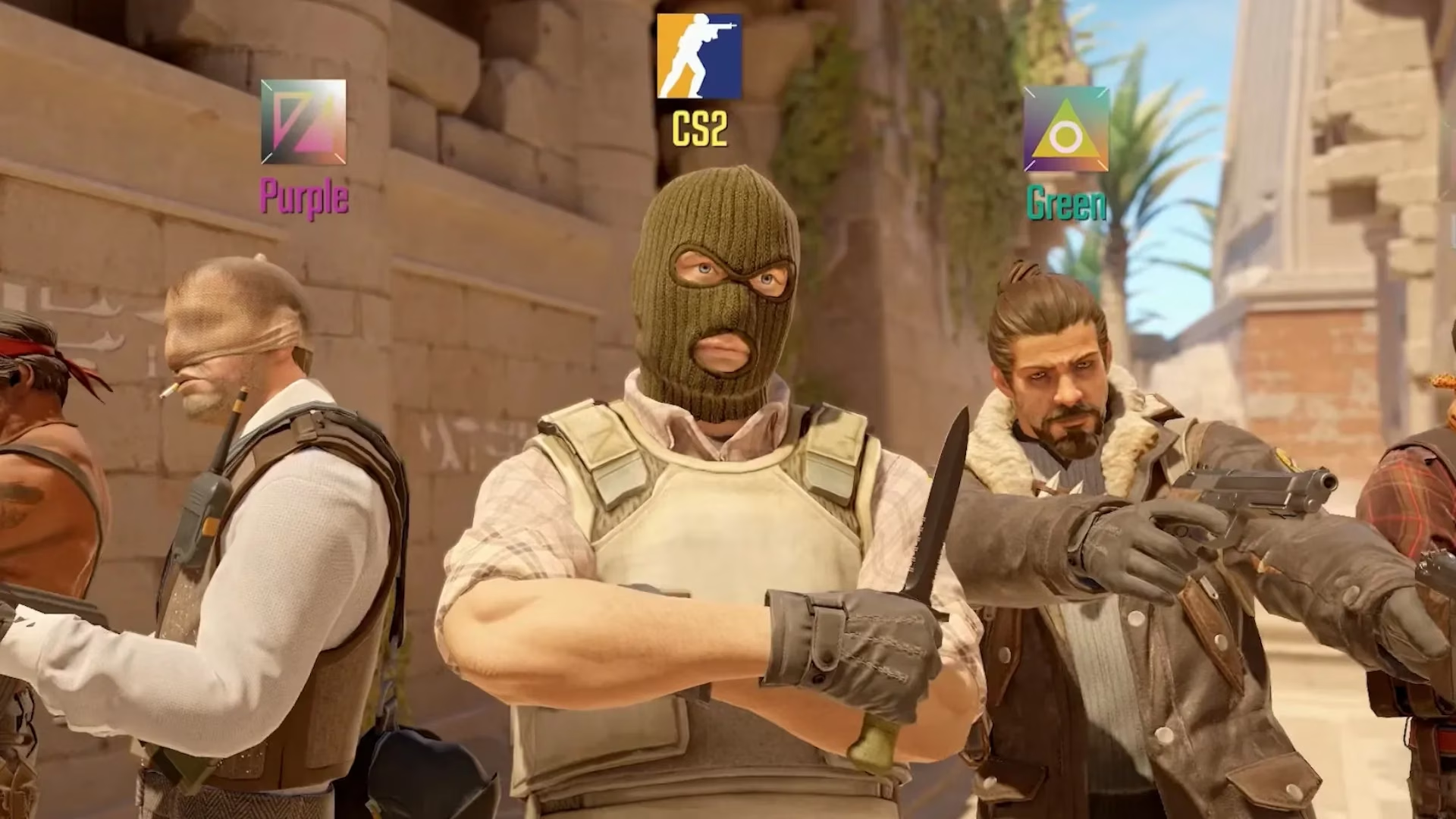
The summer of 2026 finds the Counter-Strike community in a reflective mood, scrolling through Steam libraries and social media feeds filled with nostalgia for a game that technically never really went away. Back in late September 2023, as Valve teased the imminent launch of Counter-Strike 2 with cryptic tweets and a banner that read “dawn of the final day,” millions of Global Offensive players rushed to share their playtimes, unaware that their hour counts would seamlessly carry over into the new era. Three years later, those numbers have only grown, and the conversation around them feels just as electric—and occasionally absurd—as it did in the frantic final hours before CS:GO’s transformation.
Back then, the official Counter-Strike account sent the competitive FPS sphere into a frenzy with a single post. The community read it as a clear signal that CS2 would drop on Wednesday, September 27, 2023, and the days leading up to that date became a digital wake. Social media timelines filled with screenshots of hour counts that defied belief. Players with 2,000, 4,000, even 6,000 hours seemed plentiful, while a dedicated few boasted numbers that made those totals look like trial runs. One response that captured widespread attention came from a user lamenting nearly 9,000 hours played without receiving a CS2 Limited Test invite—a sentiment that hinted at just how deeply people had invested themselves in the world of dust2 and Mirage.
The staggering dedication didn’t stop there. As journalists and community members dug deeper, the profile of a Portuguese player known as Tears surfaced, showing a jaw-dropping 24,995 hours logged in CS:GO. That’s the equivalent of 2.85 years of nonstop play—a figure that felt almost poetic in its proximity to the 25,000-hour milestone. The hope at the time was that Tears could squeeze in five more hours before the update went live, ensuring that gratifying round number. Fast forward to 2026, and thanks to Counter-Strike 2 functioning as a free update to CS:GO, Steam’s time-tracking never reset. Tears’ profile now sits comfortably well beyond 30,000 hours, a living monument to persistence that newer players eye with a mix of awe and concern.
Today’s playtime leaderboards on platforms like Steam Ladder tell an even more extreme story. While many top entries were long suspected of using idling methods to inflate their counts, the numbers remain staggering. The global record has surpassed 95,000 hours—over a decade of continuous logged time—prompting regular debates about what truly constitutes “dedication.” Yet for the average fan who simply never uninstalled the game, the casual passing of another thousand hours feels almost routine. Valve’s 2024 refinement of danger zone modes and the 2025 introduction of community-driven map rotations ensured that both CS2 and the ghost of CS:GO stayed in daily rotations, keeping player counts healthy and hour tallies climbing.
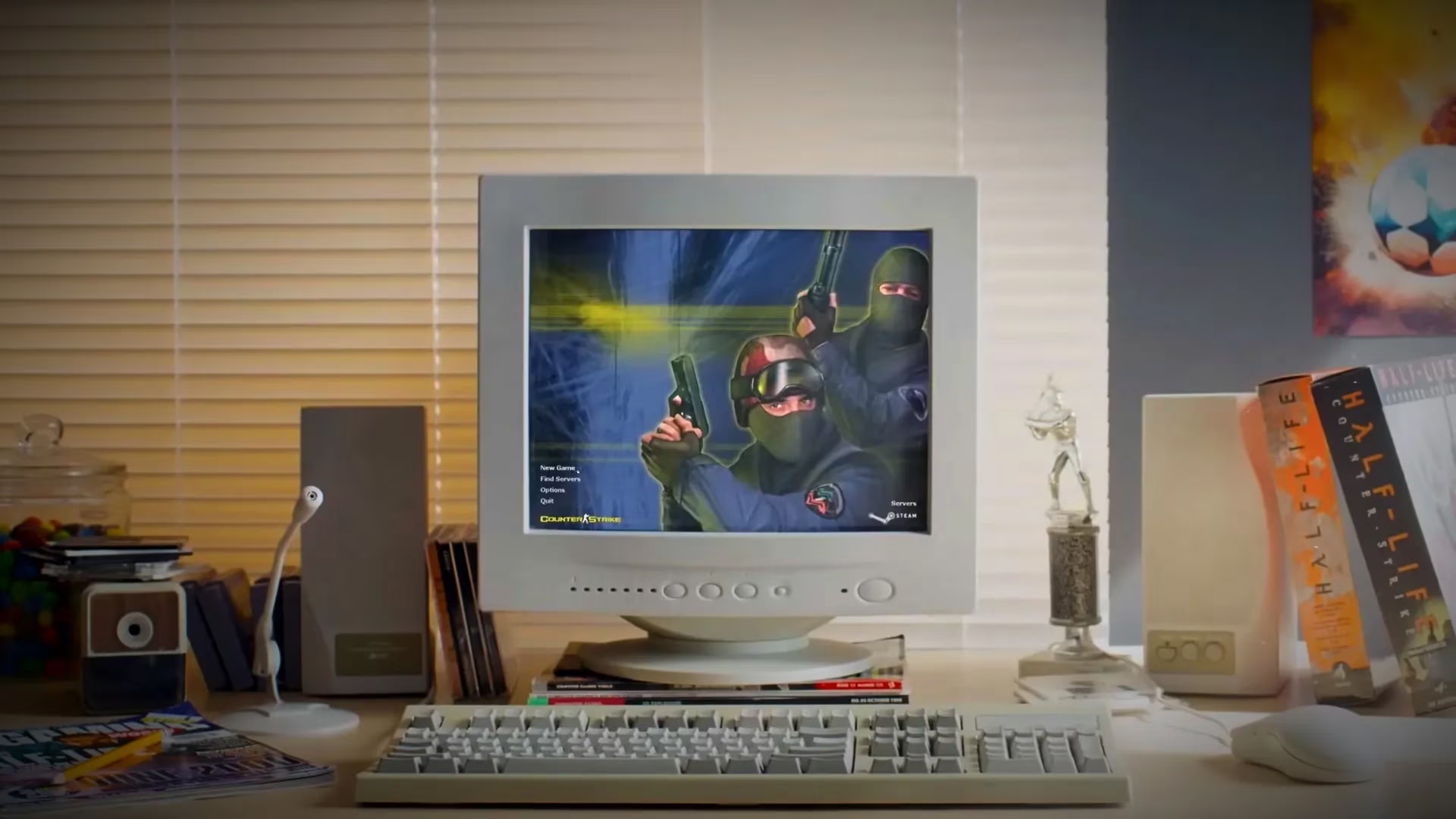
Beyond the raw playtimes, the emotional connection to the old hours endures. Many veteran players treat their CS:GO-era stats as digital legacies—proof that they were there during the KQLY era, the Astralis dynasty, or the final Major before Source 2 arrived. Community forums in 2026 are filled with comparative screenshots: one from September 2023 showing 5,432 hours, and another from this month revealing that very same Steam profile now sits at 11,000 hours. “It’s like a diary you never meant to keep,” one Redditor wrote in a thread titled Do you still check your old CS:GO hours? “Every session with the boys, every late-night clutch, it’s all in that number.”
The shift to CS2 brought undeniable improvements—smoke physics that react to gunfire, overhauled lighting, and a remade audio engine—but the playtime numbers remain the most personal link to the past. When Valve defended its case system in a 2024 legal move by stating that “people enjoy surprises,” it was talking about loot boxes. But for the millions who still glance at their Steam profile, the real surprise is how a simple integer can carry so much weight. The competitive community’s obsession with metrics has never been just about kill/death ratios or rank; it’s also about the time invested, the friendships forged, and the sheer stubbornness required to stay in the server.
As we move through 2026, the legacy of those CS:GO hour counts continues to ripple through e-sports culture. Organizations now highlight the collective experience of their rosters in promotional material, listing “combined team hours” as a badge of credibility. Young pros who were barely teenagers in 2023 have become stars, and their journey from 3,000 hours to 20,000 hours is mapped in minute-level detail on streaming platforms. For every critic who calls the obsession unhealthy, there are hundreds who point out that Counter-Strike has become a lifelong hobby—a virtual venue that friends enter night after night, year after year.
And what of that eerie “dawn of the final day” banner from the official account? It now lives on as a meme, resurrected anytime Valve hints at a significant update. In September 2023, it signaled the end of CS:GO. But three years later, the numbers tell us it was more of a continuation than a conclusion. The hours didn’t stop; they just started counting toward something new, while forever carrying the weight of the world’s most dedicated shooter community.