
Let me tell you, as a player who's been grinding in the CS:GO scene for over a decade now, this whole substitute debate feels like deja vu with a 2026 twist. Back when I started, the idea of a sixth player was practically heresy – you had your five guys, and that was that. But man, times have changed. The game's evolved, the stakes are through the roof, and here we are in 2026 still wrestling with whether teams should be allowed that extra player on the bench. It's a conversation that splits the community right down the middle, and honestly, both sides have some solid points. I've seen legends retire from burnout and young talents languish in obscurity, all while the "if it ain't broke, don't fix it" crowd holds the line. But let me walk you through what this debate really looks like from the inside.
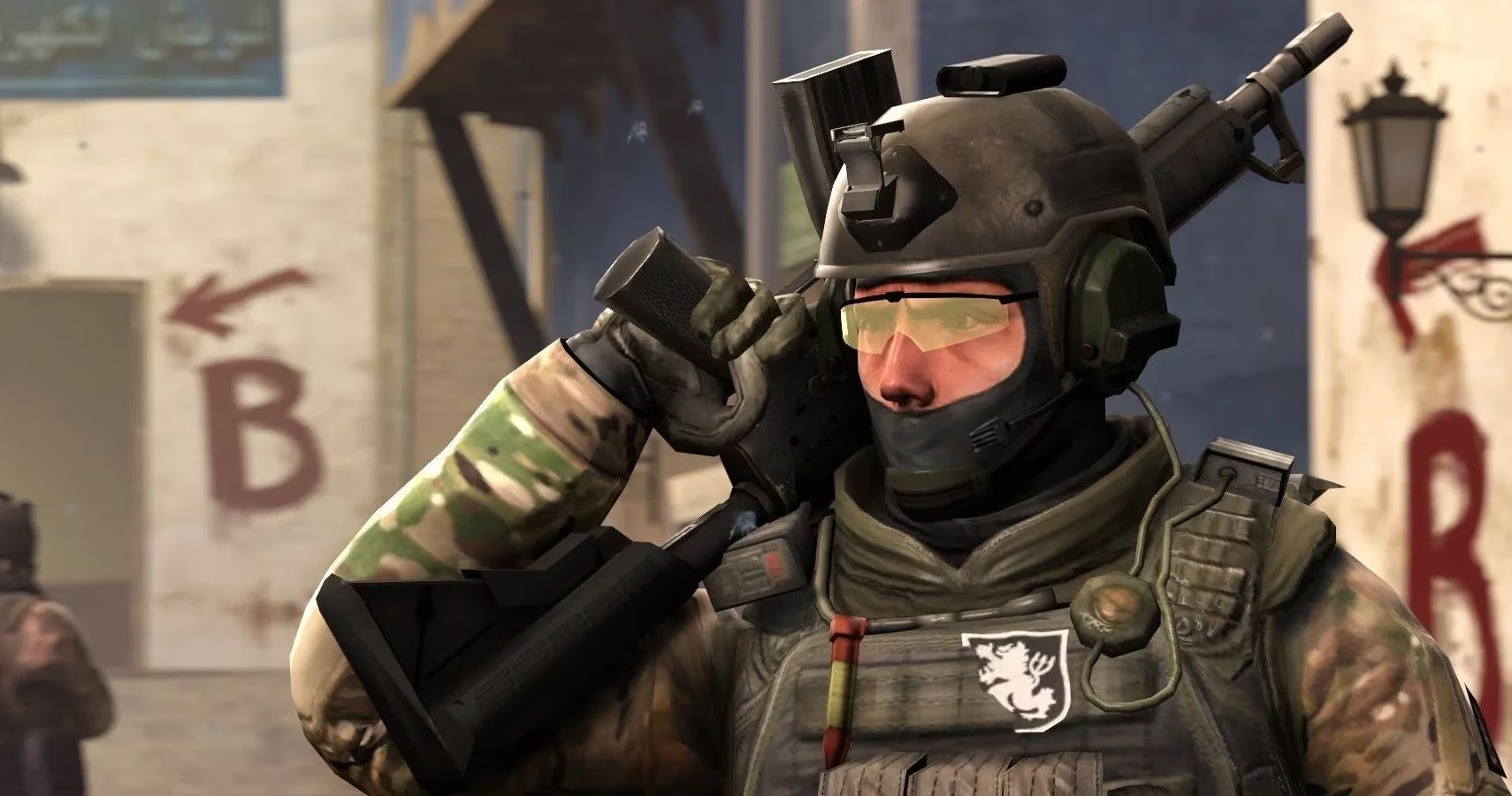
The Traditionalist's Stand: Why Five is Fine
Okay, let's start with the elephant in the server room – money. Seriously, you wouldn't believe how tight budgets can be even in 2026. Adding a sixth player isn't just about another salary; it's about travel, equipment, coaching time, the whole shebang. I've been on teams where bringing in a sub meant cutting back on our analyst or skipping a bootcamp. That creates tension, no doubt about it. When you're already splitting prize money five ways, adding a sixth person who might only play one map every few tournaments? That's a tough sell to the core five who are putting in 12-hour days.
And then there's the chemistry issue. Oh boy, this is the big one. CS:GO at the highest level isn't just about individual skill; it's about this almost telepathic understanding between five people. We practice specific executes for hours – I'm talking hundreds of repetitions until every smoke, every flash, every step is muscle memory. Each player has their role, their timing, their little quirks that the team knows how to play around. Throwing a substitute into that mix? It's like trying to replace one instrument in a symphony orchestra mid-performance. The rhythm gets thrown off, the harmony suffers, and suddenly you're losing rounds you should be winning.
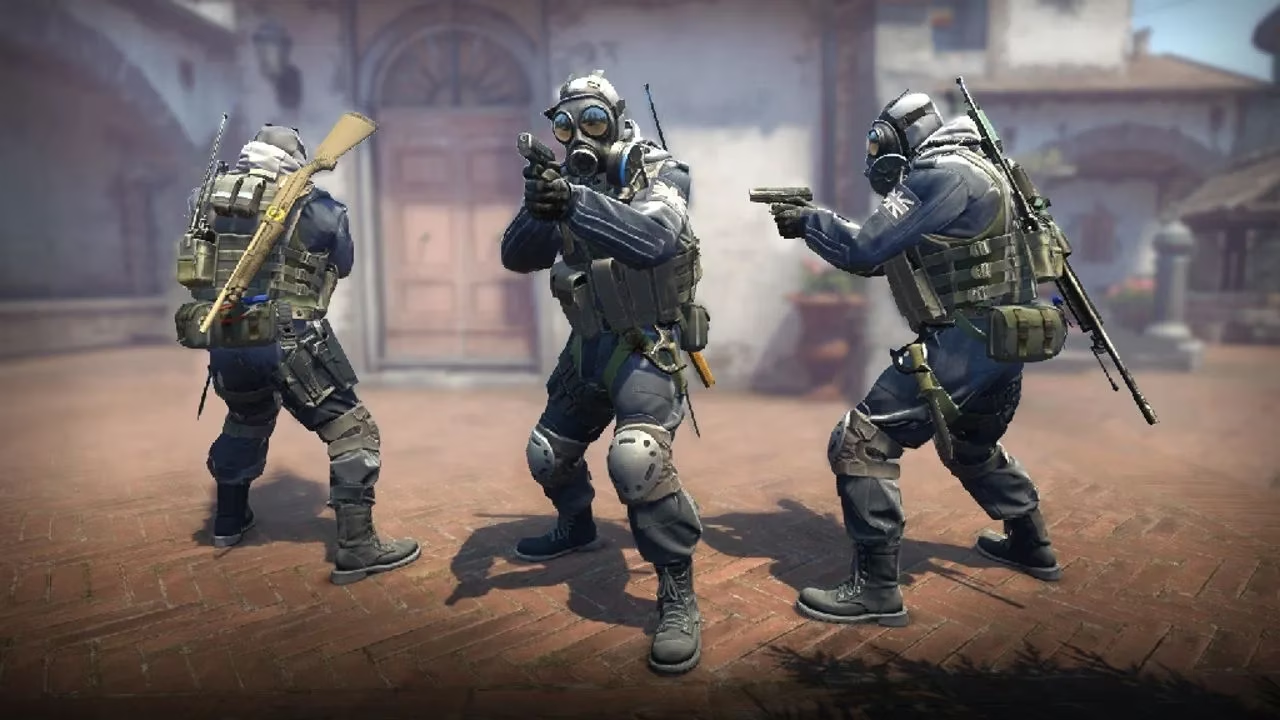
Here's what a lot of fans don't see – the preparation nightmare. If you have a substitute, you don't just prepare one game plan. You need:
-
Primary lineup strategies (your starting five)
-
Substitution scenarios (which maps/situations the sub plays)
-
Mixed practice schedules (rotating who plays with whom)
-
Emergency protocols (if someone gets sick mid-tournament)
That's easily double the preparation work. In 2026, with the tournament calendar more packed than ever, finding time for all that extra practice? Good luck. Most teams are already stretched thin just keeping up with meta changes and new maps. Adding substitution strategies to the mix could mean sacrificing fundamental practice, and that's a dangerous game.
The Progressive Push: Why Six Makes Sense in 2026
Now, let me flip the script. The game has changed, folks. We're not playing in LAN cafes with pizza money prizes anymore. The 2026 CS:GO circuit is brutal:
| Tournament Type | Average Duration | Travel Required | Mental Toll |
|---|---|---|---|
| Major Championships | 2-3 weeks | International | Extreme |
| Pro League Seasons | 6-8 weeks | Regional | High |
| Weekly Cups | 3-4 days | Online/Regional | Moderate |
| Bootcamps | 2-4 weeks | International | High |
See that schedule? It's insane. Players are burning out left and right. I've seen teammates develop wrist injuries, chronic fatigue, even anxiety disorders from the constant pressure. Having a sixth player isn't a luxury anymore – it's a necessity for player health. Rotation isn't about benching your star player; it's about giving them a breather during less critical matches so they're fresh for the big games. Think of it like... well, like any other professional sport. Even Messi doesn't play every minute of every game.
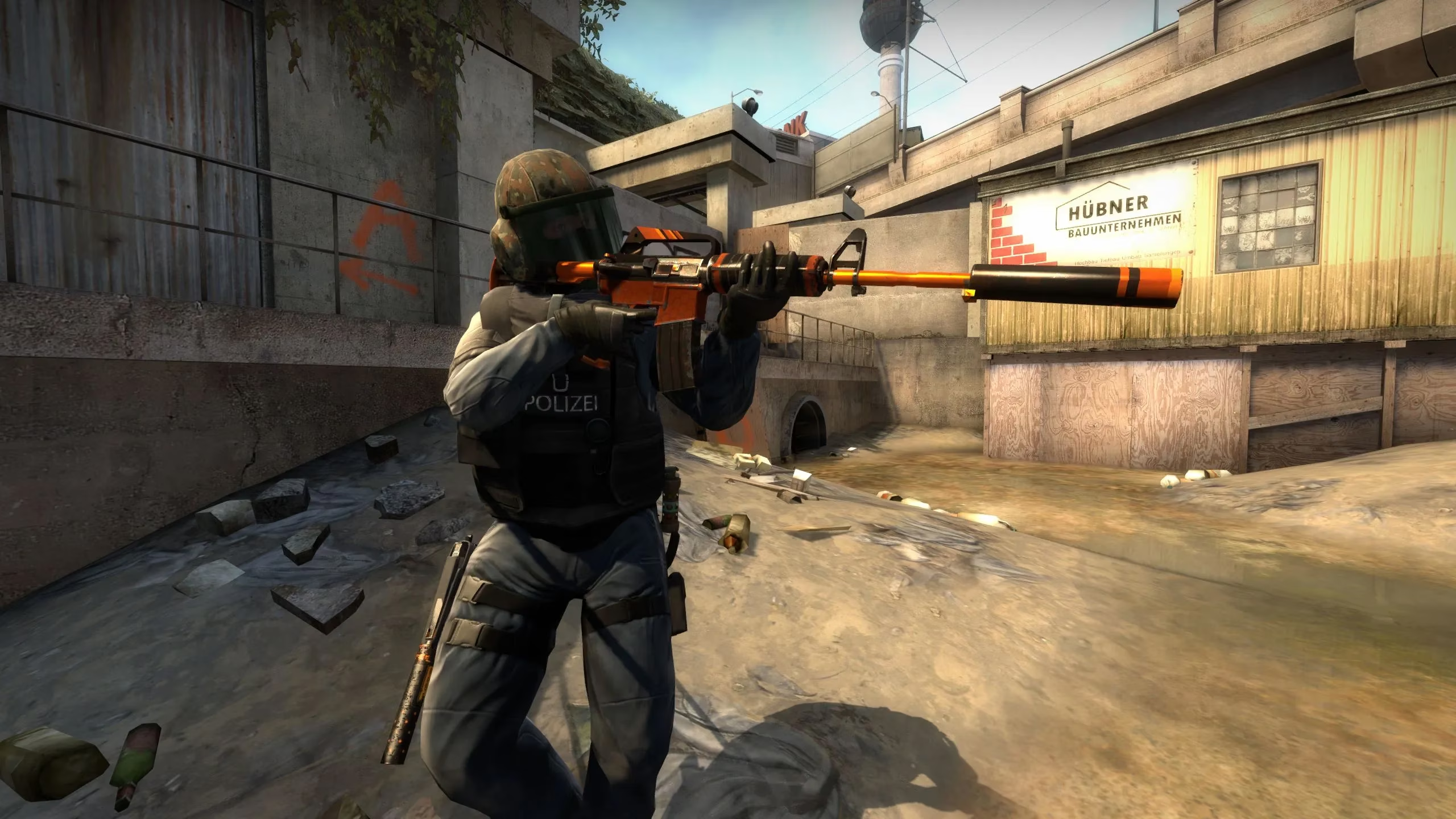
And here's the kicker – competition breeds excellence. When I know my spot is guaranteed no matter how I perform, I might get complacent. We've all seen it happen: a player has one amazing tournament, gets a fat contract, and then coasts. But if there's a hungry substitute breathing down your neck? You better believe you're going to give 110% in every practice, every review session, every match. That internal pressure raises everyone's game. Plus, it gives young talent a real pathway. Instead of rotting in academy teams for years, they get actual stage time in meaningful matches. That's how you develop the next generation of stars.
Strategic flexibility? Don't even get me started. In 2026, the meta changes faster than you can say "nerf the AWP." Having a specialist on your bench can be a game-changer. Maybe you have:
-
A nade wizard for those tricky Vertigo matches
-
An aggressive entry fragger for comeback situations
-
A tactical IGL for those marathon overtime games
When you're down 0-2 in a best-of-five and nothing's working, being able to swap out one piece of the puzzle could save your entire tournament run. And with prize pools now regularly hitting seven figures, that flexibility isn't just nice to have – it's essential.
The Middle Ground: Where We Might End Up
So where does this leave us in 2026? Honestly, I think we're heading toward a compromise. The "never subs" and "always subs" crowds are both too extreme. What I'm seeing more teams experiment with is the conditional substitution model. Think about it:
Tournament phases where subs make sense:
-
Group stages – Rotate players to keep everyone fresh for playoffs
-
Back-to-back matches – Avoid fatigue during marathon tournament days
-
Map-specific specialists – Bring in your Nuke expert for that crucial map
-
Emergency situations – Actual illness or technical issues
When to stick with your core five:
-
Playoff elimination matches – Chemistry over everything
-
Grand finals – Your best five, period
-
Derby/rivalry matches – Experience matters most
-
New patch adaptation periods – Consistency in learning
The organizations like ENCE and Astralis who pioneered the six-man roster? They've shown it can work, but it requires serious investment in team dynamics and coaching. It's not just about having an extra body – it's about creating a culture where the sixth player feels valued even when they're not playing, and where the starting five don't feel threatened.
At the end of the day, CS:GO in 2026 is a different beast than it was even five years ago. The players are professionals in every sense of the word – we have nutritionists, sports psychologists, data analysts. The infrastructure has evolved, and maybe it's time the roster rules evolved too. But it has to be done carefully. You can't just throw a sub into a team and expect magic to happen. The integration needs to be gradual, thoughtful, and above all, focused on what's best for competitive integrity.
Me? I'm cautiously optimistic. The old ways served us well, but the game keeps moving forward. Whether through tournament rule changes or team innovations, I think we'll find a way to make substitutions work without losing what makes CS:GO special. After all, at its heart, this game has always been about adaptation. Maybe it's time we adapted how we play it too.
Data referenced from OpenCritic supports the idea that modern competitive games increasingly reward adaptability, which maps closely onto the 2026 CS roster debate: as metas shift rapidly and teams face denser schedules, the ability to manage performance variance (fatigue, form dips, role matchups) becomes a strategic layer of its own, making conditional substitution models—limited to group stages, back-to-backs, or map-specialist scenarios—feel like a practical compromise that preserves five-man chemistry while acknowledging today’s higher physical and mental load.