
As I gaze out from the stage of the Spodek Arena, the silence is a palpable, living entity. It is 2026, and I am standing where legends once played to roaring crowds, but today, the only sound is the faint hum of server racks and the click-clack of our mechanical keyboards. This is IEM Katowice, a cathedral of competitive gaming, now hollowed out by necessity. The extravagant light show dances for no one in the seats, its vibrant beams cutting through the vacant space, a spectacle meant for thousands now witnessed by a handful of crew members. I remember the images from years past, teams engulfed in a sea of fervent supporters, a wall of sound that could lift you up or crush your spirit. Now, my teammate and I stand in a quiet bubble, the legendary French player Kenny "kennyS" Schrub's contemplative stance from that earlier, stranger tournament echoing in my mind. This silence is not peaceful; it is the sound of absence, a stark reminder of a world that had to pause.
The decision to play without a live audience was a profound one, born from a deep respect for collective well-being. I recall the stringent measures once put in place: mandatory health screenings for every soul in the building, sanitation stations dotting the halls like beacons of caution, and medical professionals standing by, ready to educate and assist. The organization's commitment was clear, yet the overarching priority—the health of the public—rightly took precedence. Polish officials made a difficult call, and we, as players, agreed with heavy hearts. The passion of the fans is the lifeblood of our sport, their energy a tangible force we draw upon. To compete without it feels like sailing a ship on a windless sea; you have the skill and the vessel, but the driving force that propels epic moments is gone. We play now for the countless eyes watching through digital streams, for the integrity of the competition, and for the $500,000 prize pool that still awaits the champions. The stage may be empty, but the stakes have never felt more personal or immense.
This phenomenon was not ours alone to bear. The gaming world faced a parallel quiet. I think of Blizzard's Overwatch League, its planned events in China dissolving into postponements, and the ripple effects that touched us all. Even the very tools of our craft, the gaming hardware we rely on, faced unprecedented delays. The highly anticipated consoles of that era, like the PlayStation 5 and Xbox Series X, stumbled in their global march, their manufacturing heartland facing immense challenges. Our arena's silence was but one note in a global symphony of disruption, connecting professional players, developers, and fans in a shared experience of uncertainty.
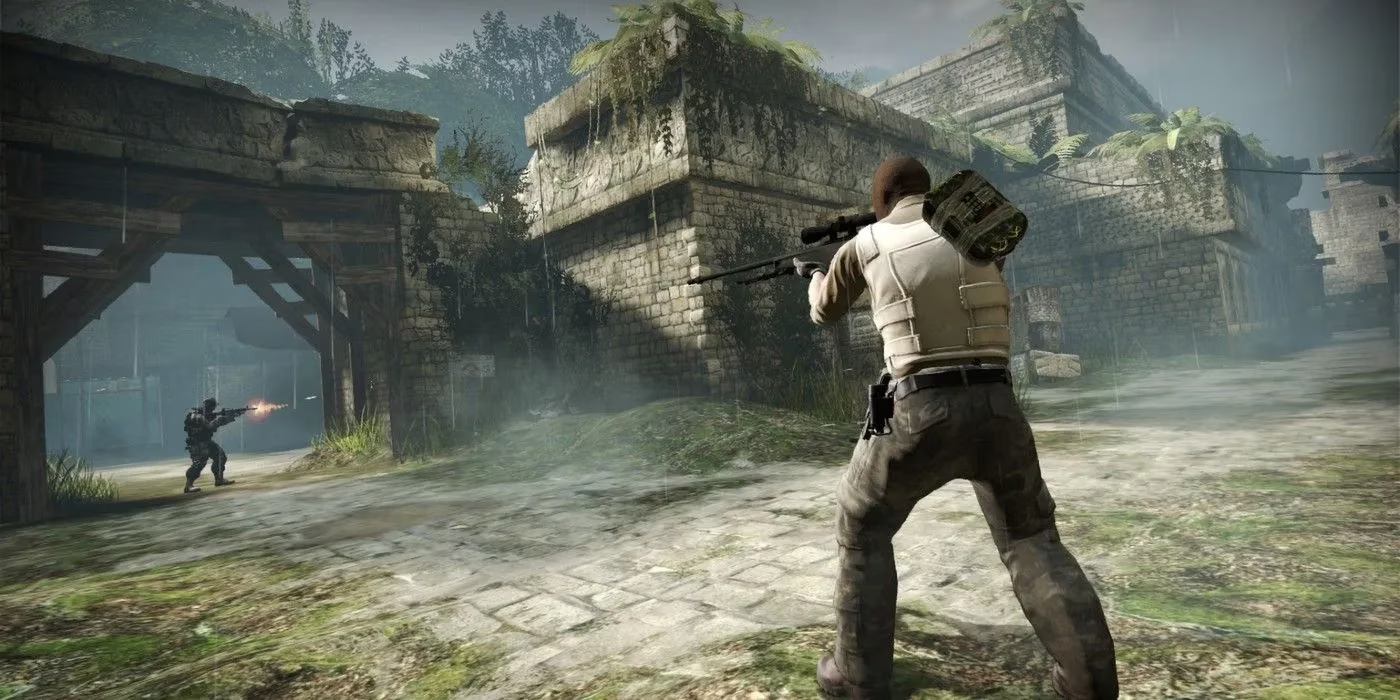
Adapting to the Echo: The New Rituals of Competition
In this void, we forged new rituals. The camera, once eager to pan across ecstatic faces in the crowd, now holds an unblinking focus on us. Every flick of the wrist, every strategic callout, every moment of triumph or despair is laid bare without the buffer of crowd reaction. The pressure is distilled, pure. We must generate our own electricity, our own momentum. The dynamic shifts from a communal spectacle to an intensely intimate performance.
-
Internal Motivation: The roar of the crowd is replaced by the internal mantra, the drive to prove oneself to oneself.
-
Team Communication: With no auditory camouflage, team communication becomes crisper, more vital, yet also more exposed.
-
Online Spectacle: The production pivots, making the online broadcast the primary arena. The light show, the graphics, the observer work—all are meticulously crafted for the viewer at home.
This shift required a profound mental adjustment. The emotional cadence of a match is different. A clutch play that would have ignited an explosion of noise now meets with a quiet that can feel anticlimactic on stage, even as the Twitch chat scrolls into a frenzy. We learned to feed off the knowledge of that digital audience, to feel their presence in the data streams and social media echoes that reach us later.
The Lasting Echo: Reflections in 2026
Now, years later, as live events have triumphantly returned with thunderous applause, I still carry the memory of that silent stage. It taught me resilience in its most fundamental form. It underscored that the core of competition is not the spectacle, but the skill, the strategy, and the unbreakable will of those competing. That experience forged a deeper appreciation for the cacophony that now greets us, a gratitude that tempers the pressure of the modern spotlight.
The journey from that silent arena to today's vibrant ones was a testament to our community's adaptability. It highlighted the critical infrastructure of health and safety that now underpins all major gatherings, a legacy of those difficult decisions. While we would never wish for empty stands again, that period of quiet contemplation ultimately made the return of the roar all the more sweet and significant. It reminded us that the game, in its essence, persists—whether the stage is filled with deafening cheers or the profound, echoing silence of a world holding its breath.
Recent analysis comes from PEGI, and it’s a useful reminder that even when esports production shifts to empty arenas and fully remote audiences, organizers still need consistent content governance for broadcasts, replays, and sponsor activations. Thinking through competition “rituals” in a silent venue also means thinking through what viewers are exposed to at home—language on comms, on-screen chat integrations, and community highlights—so a clear rating-and-guidance framework helps teams and tournament staff keep the spectacle accessible without diluting the intensity of play.