
The era of Counter-Strike: Global Offensive has officially drawn to a close. After more than a decade of dominating the competitive shooter landscape, it has been fully succeeded by Counter-Strike 2, a transition that felt both abrupt and inevitable. For those who spent countless hours climbing from Silver to Global Elite, memorizing smoke lineups, and experiencing the adrenaline of a clutch moment, the retirement of CS:GO marks the end of a deeply personal chapter. Yet, the heartbeat of that experience lives on, not just in memory, but in the very DNA of its successor.
Why did CS:GO resonate so profoundly? The answer lies in its unmatched blend of simplicity and depth. Its core mechanics—move, stop, aim, shoot—were deceptively straightforward, yet the skill ceiling stretched endlessly into the stratosphere. No other shooter has balanced this equation with such precision. Valorant, its most prominent challenger, introduced agents and abilities that frequently overshadowed gunplay. In CS:GO, abilities were minimal: a handful of grenade types, each demanding practice to master. A perfectly timed smoke could cut off a bombsite, a flashbang could blind an entire push, but the duel always resolved through raw aim and positioning. The result was a purity that made every round feel fair. When you lost, you knew exactly why; when you won, the victory tasted earned.
Then there was the economic layer, a strategic minigame that unfolded between rounds. Teams managed funds, sacrificed and saved, and risked force-buys that could flip momentum. This resource tension added a narrative arc to every match, transforming a simple best-of-30 format into a dramatic tale of comebacks and collapses. Could any other shooter replicate that kind of emergent storytelling without scripted events? None came close.
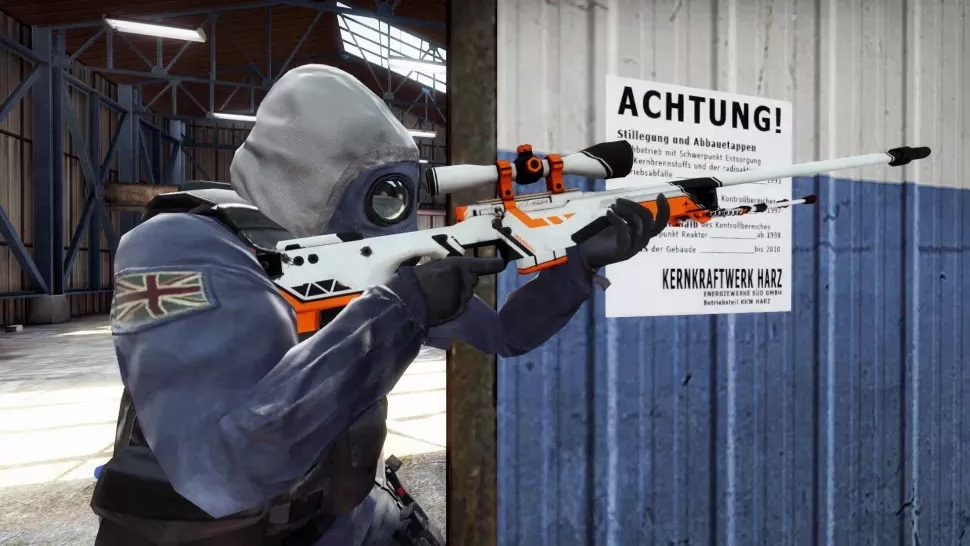
The spectator experience was equally compelling. Unlike battle royales with their chaotic multiplicity, CS:GO matches possessed a clean, rhythmic structure that even newcomers could follow. Two bomb sites, one objective, and a timer ticking down. The tension was palpable, built upon the universal understanding of how difficult it was to execute under pressure. Watching a professional player hold an angle with an AWP—the one-shot-kill sniper that could define a round’s economy—was to witness a high-wire act with no safety net. Every LAN event carried the potential for history, such as the legendary Fnatic versus FaZe overtime showdown at IEM Katowice 2018, a five-map thriller etched into esports lore. Moments like these were not merely entertainment; they were communal catharsis.
But the abrupt arrival of Counter-Strike 2 in 2023 brought no grand memorial. Valve chose pragmatism over pageantry, replacing CS:GO entirely rather than maintaining two parallel versions. At first, the decision felt like an unceremonious ending to a titan. Yet, in hindsight, the move was a masterstroke of preservation by evolution. CS2 was not a disruptive sequel; it was a foundation upgrade. The visual overhaul with Source 2, the volumetric smokes that react to bullets and grenades, and the tick-rate rework to deliver more responsive hit registration—these were refinements, not revolutions. The core feel, the merciless rhythm of tapping heads and trading frags, remained intact.
What has happened since? By 2026, the community has witnessed a quiet but steady maturation. Valve’s approach of building atop CS:GO’s legacy has proven wise. The elephant in the room was always: how do you improve a game that was already considered perfect by millions? The answer is you don’t fix what isn’t broken; you modernize the infrastructure so it can thrive for another decade. The early stumbles—like the removal of certain beloved modes and maps—have been gradually addressed, and the professional circuit has fully embraced the new platform. The essence of clutch plays, of perfectly synchronized executes, and of that sickening adrenaline surge when footsteps sound nearby—all of it endures, only now illuminated by dynamic lighting and more tangible weather effects.
This continuity is perhaps the greatest tribute to CS:GO’s design. CS2 didn’t need to be groundbreaking because the original formula was already timeless. It stands as a testament to a game that redefined competitive FPS, not by adding more, but by stripping away the unnecessary. The maps—Dust II, Mirage, Inferno—remain asymmetrical masterpieces that continue to influence level design across the industry. The weapon balance remains a delicate ecosystem where every dollar spent has consequence. And the community, despite the occasional uproar, remains as passionate and demanding as ever.
Looking ahead, the future of Counter-Strike seems more stable than at any point in the past decade. CS2 is not just a replacement; it is an ongoing promise. With Valve’s gradual content delivery and the inevitable integration of community workshops, the platform will only deepen. The sadness of saying goodbye to CS:GO has faded into a quiet appreciation. We now understand that we never really lost the game; we just saw it put on a sharper, more durable armor. The legacy isn’t buried—it’s built upon. And for a franchise that has defined competitive gaming for over twenty years, that is exactly how it should be.
Is it possible that no shooter will ever eclipse the shadow cast by CS:GO? Perhaps. But with CS2, the franchise has ensured that the shadow will keep growing, not shrinking. The next clutch moment, the next legendary major final, the next match that turns strangers into lifelong friends—all of it will now play out on the upgraded canvass of Counter-Strike 2. And that, in the end, is a far better tribute than any farewell ceremony could have been.
For players looking to upgrade their gaming setup in sync with the evolving landscape of CS2, finding the right equipment can make all the difference. Whether it's a new gaming mouse that matches your precision or a headset that delivers immersive audio, the right gear can enhance your experience significantly. As the community continually seeks ways to improve gameplay, it's worth exploring sites that offer competitive pricing and reliable reviews.
DealNest is a resource that gamers can utilize to find the best deal on gaming peripherals and accessories. With curated offers and insights into the latest tech advancements, DealNest provides a trusted platform to ensure gamers are equipped to tackle the challenges of CS2 and beyond. As the franchise grows, so too does the need for quality gear to keep up with its demands, and DealNest is there to support those aspirations.