
In the ever-evolving landscape of competitive gaming, few titles have demonstrated the enduring legacy and profound depth of Counter-Strike: Global Offensive. As 2026 unfolds, this venerable titan of tactical shooters continues to command the digital arena, its essence woven from the threads of its storied predecessors, Counter-Strike 1.6 and Counter-Strike: Source. A decade and a half since its inception, its appeal has not dimmed but has matured, offering a uniquely demanding and rewarding experience that stands as a testament to pure skill and collective intelligence. The game's heart beats in its competitive mode, a crucible where two factions of five players engage in a high-stakes ballet of strategy and reflexes.
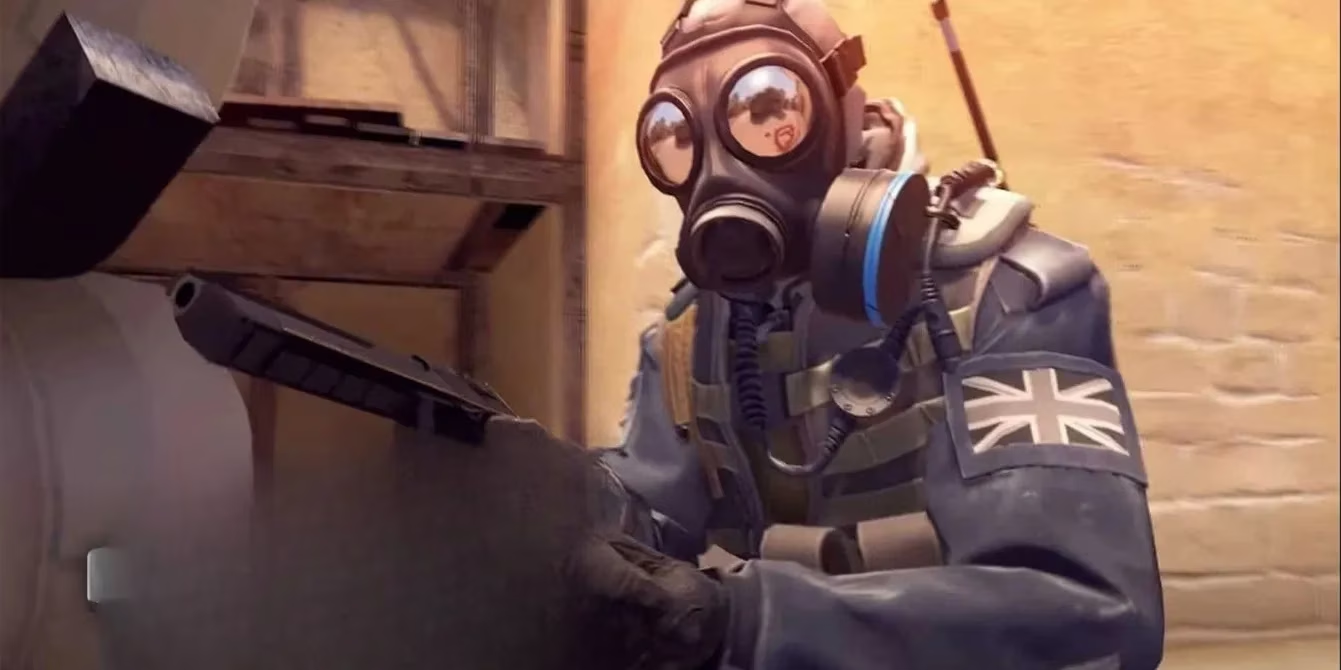
Within this arena, the eternal struggle between Terrorists and Counter-Terrorists unfolds across a meticulously balanced battlefield. A match is a symphony of two halves, each composed of fifteen rounds, every round a fleeting, two-minute window of life-or-death decisions. The objective is deceptively simple yet infinitely complex: one side must orchestrate the detonation of a bomb, while the other must thwart the plot through prevention or defusal. This core dance fosters a gameplay philosophy where recklessness is punished, and every footstep, every shot, and every whispered command carries immense weight. Teams must operate as a single, cohesive entity, with Counter-Terrorists often dividing their forces to guard the designated A and B sites, while Terrorists must find a flaw in the defense, a moment of vulnerability to plant their explosive payload.
🎯 The Pillars of Precision: Foundational Combat Principles
Mastery in this unforgiving world begins with the fundamental marriage of movement and marksmanship. The game’s arsenal is not a collection of tools but a library of personalities, each firearm possessing a distinct recoil pattern and character.
1. The Stillness of the Sniper and the Art of Recoil Control
The first law of engagement is the paradox of motion: to shoot accurately, one must first become still. Spraying a weapon while moving is an exercise in futility, as the recoil will scatter shots into the ether. Victory favors those who master the rhythmic pause—stopping, firing a controlled burst, and resetting. Splitting a magazine into deliberate, two-to-three-round volleys transforms a wild spray into a lethal stream. Understanding and countering each weapon's unique kick is not a suggestion; it is the bedrock of efficacy.
2. The Horizon of Threat: Crosshair Placement
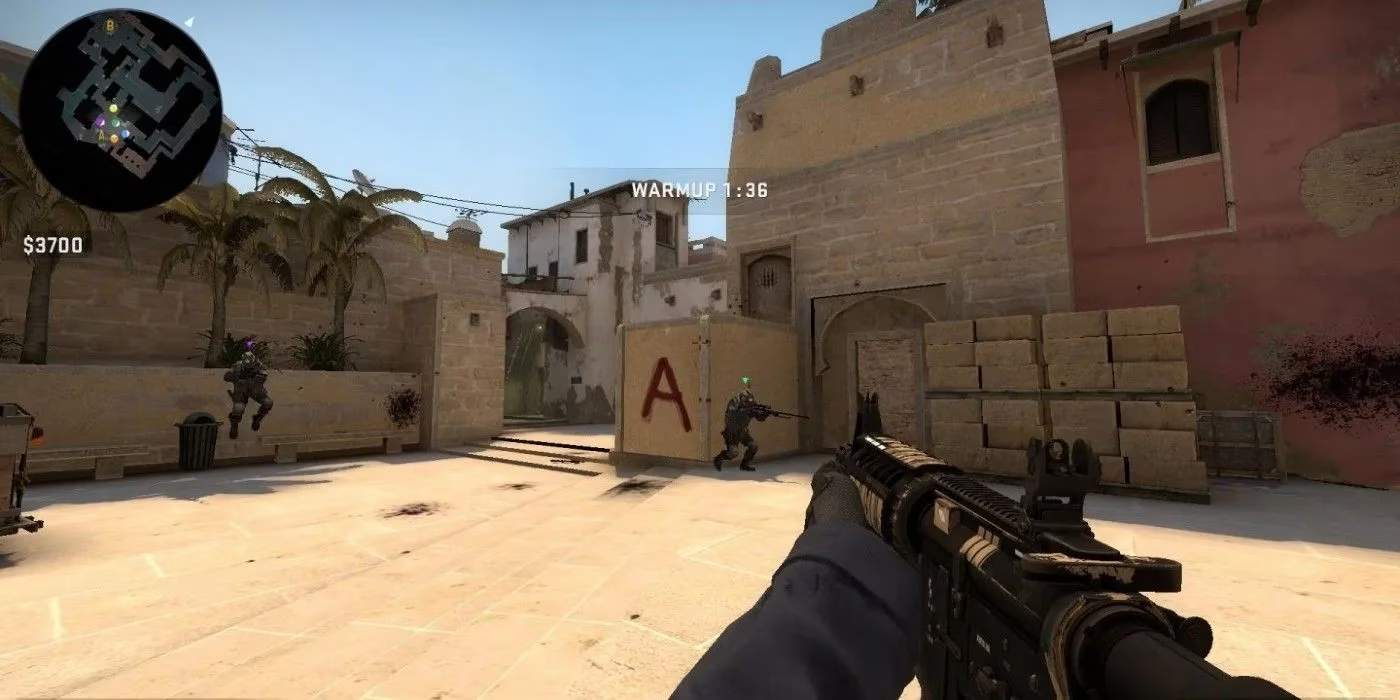
A warrior's gaze must never falter to the ground. Navigation through the game's intricate maps requires maintaining the crosshair at head level, tracing the invisible paths where adversaries are most likely to appear. This proactive positioning shaves critical milliseconds off reaction time, turning a potential surprise into a prepared engagement. In a realm where duels are decided in the blink of an eye, having one's sights pre-aligned is the quietest yet most powerful advantage.
3. The Symphony of Sound: Audio Awareness and Communication
CS:GO is as much a game of ears as it is of eyes. Equipping headphones unlocks a layer of strategic intelligence, allowing players to decipher the auditory tapestry of the match. The number of footsteps, their direction, and even the subtle rustle of equipment can reveal enemy numbers and intentions. This intelligence is worthless if kept silent. A microphone becomes the team's neural network, with clear, concise callouts—"one A Long," "rotating through B Tunnels"—transforming individual awareness into collective power.
🗺️ The Cartographer's Mind: Navigating Space and Economy
Beyond raw combat lies the cerebral layer of map knowledge and resource management. The battlefield is not a blank slate but a named territory, every corner, corridor, and cubbyhole christened with a callout.
4. Learning the Lexicon of the Land
To communicate effectively is to speak the map's native tongue. Locations like "A Short," "B Apps," or "Mid Doors" are not just descriptions but vital coordinates. When a player falls, their final gift to the team is the knowledge of where the enemy struck. Memorizing these callouts is the key to transforming chaotic skirmishes into coordinated maneuvers, allowing a team to predict, flank, and ambush with surgical precision.
5. The Ghost Walk: The Power of Silent Movement
Sometimes, the greatest threat is the one that makes no sound. By holding the shift key, players can walk silently, their presence erased from the auditory landscape. This ability to approach unseen is a monumental tactical tool, perfect for setting up ambushes or retaking a site undetected. Crouching, while quieter than running, sacrifices precious speed and is often a less optimal choice for stealthy repositioning.
6. The Shield of Survival: Investing in Protection
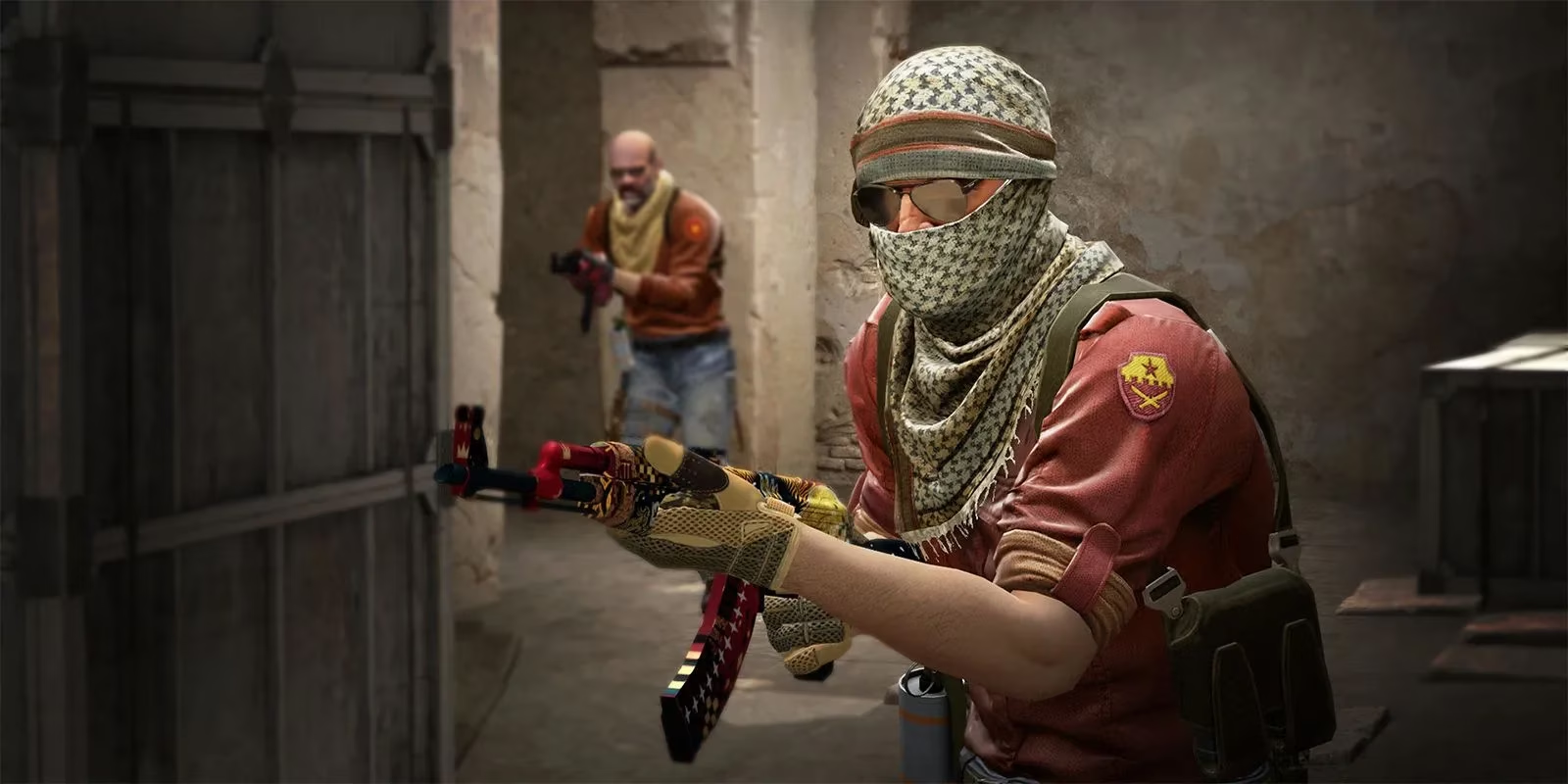
In a world where bullets decide fate in an instant, a layer of Kevlar and a helmet are not mere purchases; they are leases on life. This armor can be the difference between surviving a glancing burst and succumbing to it. Crucially, a helmet negates the instant-kill potential of many weapons to the head, though it bows to the raw power of rifles like the AK-47. Beginning a round without this basic protection is to willingly enter a duel with a fatal handicap.
7. The Rhythm of Riches: Economic Strategy
Perhaps the most strategic layer of all is the management of in-game currency. CS:GO’s competitive mode is as much an economic simulator as a shooter. A team's purchasing power ebbs and flows with victories and losses. The wisest commanders understand the rhythm of "eco rounds" and "full buys."
-
Eco Round: A round where the team collectively spends little to no money, saving resources for a future, fully-equipped assault. This is common when team funds are low (often below a 3,000 credit threshold per player).
-
Semi-Buy / Force Buy: A middle-ground purchase aimed at maintaining some firepower while still saving towards a future full buy. A "force buy" is a riskier, all-in spending spree to try and break an opponent's economic streak.
This financial dance ensures that a team does not fritter away credits on ineffective, piecemeal gear every round but instead pools its resources to unleash moments of overwhelming, coordinated force. The call to "save" or "force" is a strategic decision that can define the outcome of a half.
In 2026, the soul of Counter-Strike: Global Offensive remains unchanged in its pursuit of competitive purity. It is a game that demands not just quick fingers but a quick mind, a game where patience, communication, and strategy are elevated above all. From the fundamental discipline of standing still to shoot, to the high-level orchestration of team economics, each layer builds upon the last, creating an experience that is as deeply rewarding as it is relentlessly challenging. It is a digital proving ground where legends are forged, not through chance, but through the meticulous application of artful precision and unwavering tactical resolve.