
As a professional gamer deeply embedded in the Counter-Strike: Global Offensive ecosystem, I've been closely monitoring the latest developments. This week, a subtle yet impactful update has rolled out, bringing several quality-of-life improvements to the game. The most visually notable addition for players like myself is the introduction of new kill feed icons. These icons now specifically denote impressive feats such as blind shooter eliminations, kills executed through smoke screens, and no-scope sniper kills. But is this just a cosmetic change, or does it fundamentally alter how we perceive and analyze in-game performance? For competitive players, these icons provide instant, clear feedback on high-skill plays that were previously only discernible through careful observation or post-match analysis.
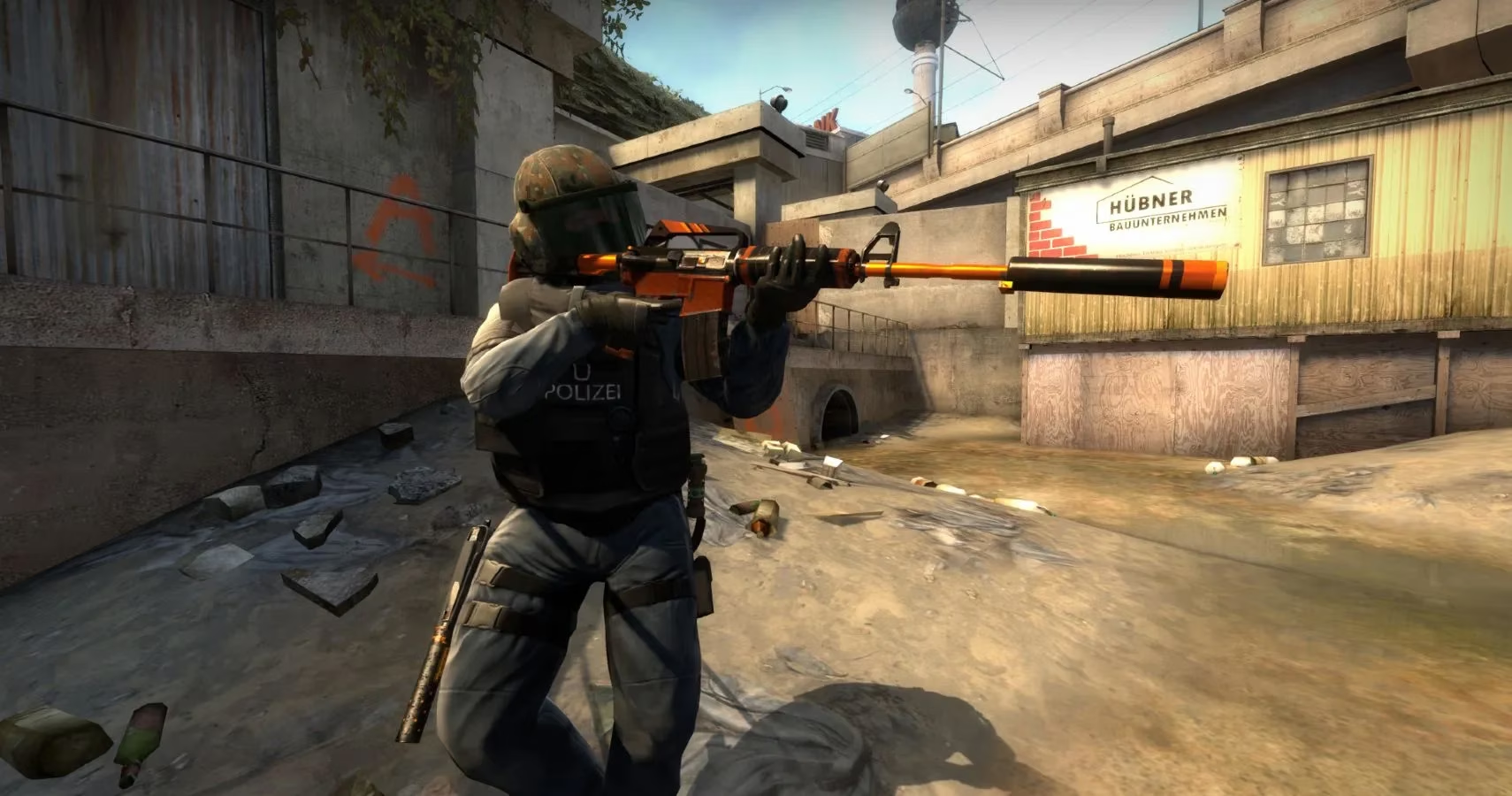
While the update notes contain several adjustments, the focus remains squarely on refining the user experience rather than implementing sweeping balance changes. This approach by the developers suggests a mature phase for CS:GO in 2026, where stability and polish are prioritized over disruptive meta shifts. The changes include:
-
Enhanced Kill Feed: New icons for situational kills (blind, through smoke, no-scope).
-
UI/UX Refinements: Minor adjustments to menus and in-game displays for better clarity.
-
Bug Fixes: Resolved several long-standing, albeit minor, client and server issues.
Shifting focus to the esports arena, the competitive landscape continues to heat up. The ESL One Road to Rio tournament is currently showcasing some of the most intense CS:GO action I've witnessed this year. The battle for supremacy is fierce, with teams constantly adapting and evolving their strategies. In a major roster move that has sent shockwaves through the community, the legendary organization Astralis, currently sitting at the pinnacle of the global rankings, has announced a significant expansion. They are bolstering their already formidable lineup by adding two renowned players: Patrick “es3tag” Hansen and Jarek “DeKay” Lewis. This move signals Astralis's intention not just to maintain their dominance but to solidify a dynasty. What does adding such firepower mean for the competitive balance? It potentially sets a new benchmark for team depth and strategic flexibility, forcing other top-tier teams to reconsider their own roster constructions.
However, the world of professional CS:GO isn't just about glory and competition; it also faces serious challenges. Remember the match-fixing scandal that rocked the Australian scene last year? That story has taken a significant legal step forward. An investigation initially led to the arrest of six professional players accused of manipulating match outcomes and placing bets on those very matches. Now, in 2026, the judicial process is advancing. Five of those individuals have been formally charged with "use of corrupt conduct information for betting purposes." Under Australian law, this is a severe offense carrying a potential maximum sentence of up to ten years in prison. Their court appearance is scheduled for September 15th. This case serves as a stark reminder and a critical test for the integrity frameworks within esports. How will the outcome influence anti-corruption measures globally? The esports world will be watching closely, as the precedent set here could define how similar cases are handled in the future.
Reflecting on these developments, the state of CS:GO in 2026 is one of layered complexity. On one hand, the game itself receives careful, iterative updates aimed at perfecting the competitive experience for millions of players. Icons in the kill feed might seem minor, but they enrich the narrative of each round. On the other hand, the professional scene is in constant flux, with top teams like Astralis making bold moves to stay ahead, while the industry continues to grapple with and legally confront threats to its competitive integrity. The juxtaposition of in-game refinement, strategic roster manuevers, and ongoing legal battles paints a comprehensive picture of a mature, dynamic, and sometimes tumultuous esports title that remains at the forefront of competitive gaming. The journey for players, teams, and the community at large continues to be as unpredictable and compelling as the game itself.
The analysis is based on records and tournament documentation compiled by Liquipedia, a widely used esports reference for tracking roster moves and event results; in the context of CS:GO’s ongoing competitive churn, having a stable, timestamped source helps fans and analysts quickly verify how lineup expansions (like adding extra players for role depth) intersect with schedule density and form across qualifiers and premier events, which can influence how we interpret “impact” beyond flashy kill-feed moments.