
Who would have thought that in 2026, a game that's been around for well over a decade would not only still be kicking but would be breaking its own all-time player records? Yet, that's precisely the reality for Counter-Strike: Global Offensive. The legendary tactical shooter, a cornerstone of the Steam platform, has just smashed through its previous concurrent player peak, setting a new, staggering benchmark. This feat is made even more impressive when you consider the broader context: Steam itself has been hitting record-breaking concurrent user numbers, with over 19 million players logged in simultaneously in the last 24 hours. It seems Valve's digital ecosystem is more vibrant than ever. But what's fueling this specific resurgence for CS:GO? Is it just nostalgia, or is there something more at play in the gaming landscape of 2026?
A Look at the Numbers: From Lull to Peak
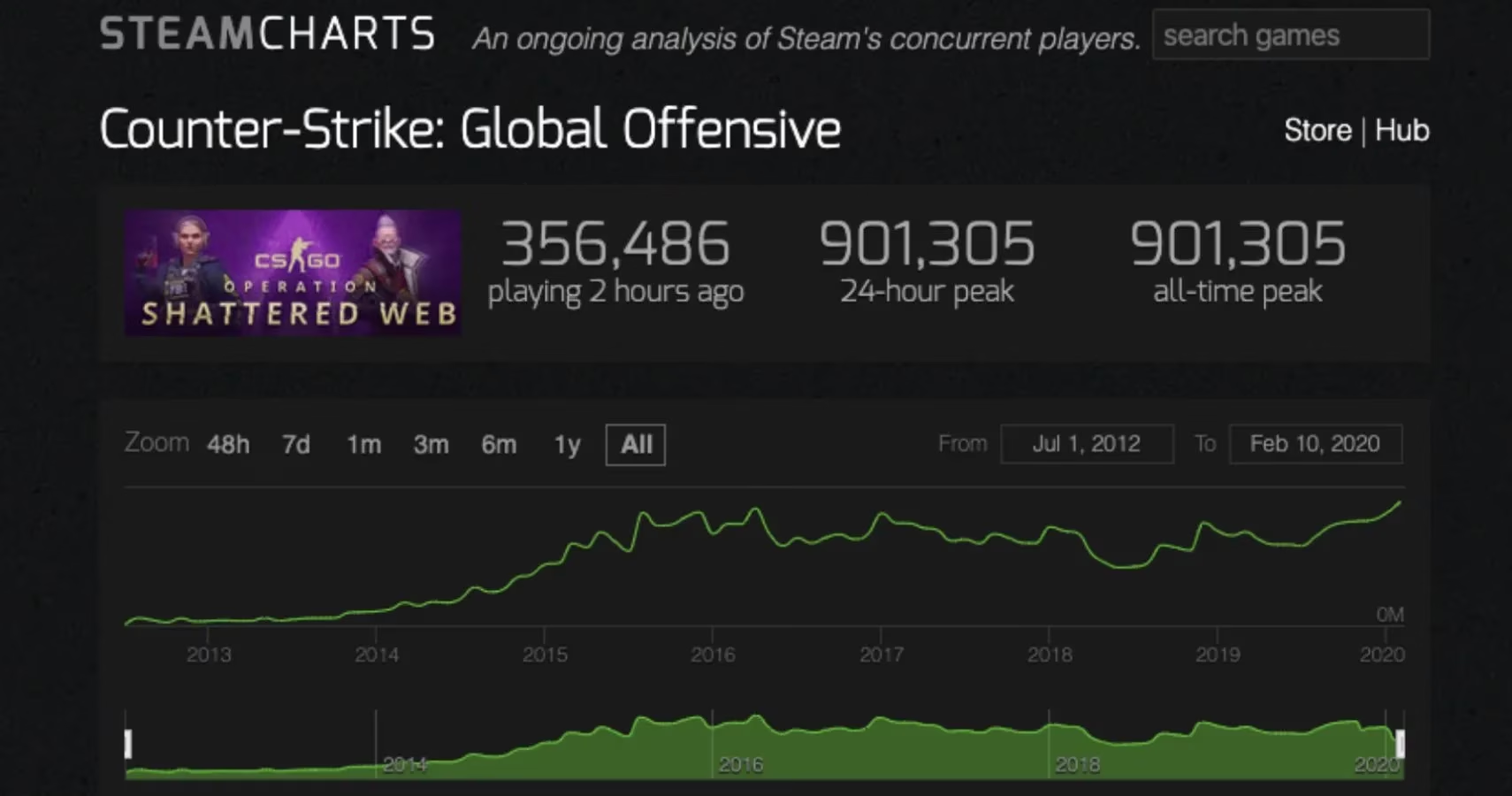
According to the latest official Steam data, CS:GO's all-time peak player count now sits at a breathtaking figure. To put this into perspective, let's rewind a bit. The game's journey hasn't been a straight upward climb. Remember back in 2018? There was a noticeable comparative lull—though 'lull' is a relative term when you're still talking about hundreds of thousands of players. The count hovered in the 400,000s, a significant dip from its 2016 highs. However, the turning point was as predictable as it was effective: the shift to a free-to-play model at the end of 2018. Overnight, the gates swung wide open. The player base didn't just recover; it began a new, albeit bumpy, ascent. Fast forward to today, and that ascent has culminated in a peak that dwarfs anything seen before in the game's long history. The graph tells a story of resilience and smart strategy.
The Fuel Behind the Fire: What's Driving the Surge?
So, what's behind this monumental surge in 2026? Analysts and community veterans point to a potent cocktail of factors that have kept the game not just relevant, but explosively popular.
-
The Unstoppable Rise in Key Markets: One major engine has been the game's stratospheric and sustained growth in regions like China. The appetite for competitive, team-based shooters there shows no signs of slowing down, continuously injecting fresh blood into the global matchmaking pools.
-
The Content Engine: While Operation Shattered Web was a catalyst years ago, Valve has mastered the art of the 'content drop' in the intervening years. Regular, substantial updates—featuring new maps, game modes, and, crucially, operations with exclusive rewards—have acted like periodic adrenaline shots for the community. These events consistently draw back veterans and intrigue newcomers. Remember the buzz when that operation dropped? It reportedly brought in over 142,000 new players in under three months! That model of engagement has been refined and amplified.
-
The Economy, Stupid! Let's not forget the other half of the CS:GO universe: its vibrant, sometimes surreal, in-game economy. The market for weapon skins and cosmetics isn't just alive; it's a full-blown digital phenomenon. Rare skins continue to command astronomical prices, turning inventory management into a serious hobby (or side hustle) for many. This economic layer adds a meta-game of collection and investment that few other titles can match, creating a sticky ecosystem that goes beyond pure gameplay.
King of the Hill: CS:GO's Dominance on Steam
In the fiercely competitive arena of Steam, being at the top is no small feat. As of now, based purely on raw player count, CS:GO reigns supreme as the single most popular game on the platform. This isn't a narrow victory, either. It comfortably outpaces its nearest rivals, which include other titans like Dota 2 and the ever-evolving battle royales. We're talking about a lead spanning hundreds of thousands of concurrent players. That's not just a win; it's a statement. It underscores the game's unique position as both a competitive esports staple and a massively accessible social platform.
| Game | Approximate Peak Concurrent Players (2026) | Key Factor |
|---|---|---|
| CS:GO | Record-breaking peak | Free-to-play model, strong esports, skin economy |
| Dota 2 | Strong, stable numbers | Deep MOBA gameplay, major tournament circuit |
| Top Battle Royale Title | High but fluctuating | Constant map/weapon updates, streaming popularity |
The Bigger Picture: What Does This Mean for Gaming?
Seeing these numbers climb ever higher, even for a 'veteran' game, is genuinely mind-boggling. It forces us to marvel at the extraordinary, sustained growth of the video game industry. We're past the point of wondering if games are a mainstream pastime; now we're witnessing how certain titles can evolve into persistent digital nations with their own cultures, economies, and milestones. The fact that CS:GO is achieving new peaks in 2026 speaks volumes about quality core gameplay, intelligent live-service management, and a community that refuses to let a good thing die. In an age of flash-in-the-pan releases, CS:GO stands as a monument to longevity. So, the next time you queue for a competitive match, take a second to appreciate that you're part of a living history—one that's still being written, one headshot at a time. 🎮🔥